

Egg freezing has become a much more common conversation in recent years.
Maybe you have heard friends talk about it. Maybe your doctor mentioned it. Or maybe you are simply wondering what your options are for the future.
The idea behind egg freezing is simple: It allows you to freeze your eggs now and use them later if you decide to try for pregnancy.
For many people, it is about creating more flexibility in how and when they build their family.
Let’s break it down.
What Is Egg Freezing?
Egg freezing, also called oocyte cryopreservation, is a way to preserve your eggs for future use.
Doctors collect eggs from your ovaries, freeze them and store them safely in a lab.
If you decide to try to get pregnant later, the eggs can be thawed, fertilized with sperm and transferred to the uterus through IVF.
One important thing to know: Egg freezing does not guarantee a future pregnancy. Instead, it preserves the eggs you have today, when they may be healthier and more plentiful.
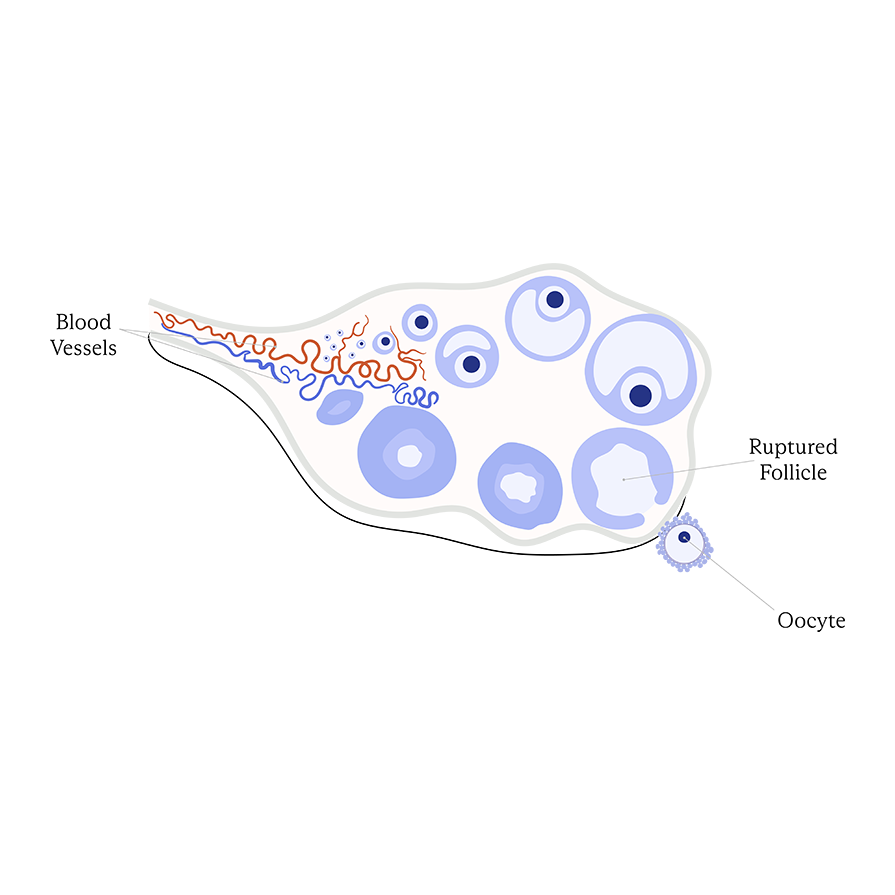
Controlled Ovarian Stimulation diagram of ovary
Why People Choose to Freeze Their Eggs
There is no single reason people decide to freeze their eggs.
For some, it is related to medical care. For others, it is about life timing.
Here are a few common reasons:
Medical reasons
- Cancer treatment that could affect fertility
- Conditions like endometriosis that may require ovarian surgery
- Certain genetic conditions that could impact ovarian health
Personal planning
- Wanting to delay pregnancy for career, school or personal goals
- Not having a partner yet but wanting the option for biological children later
Family building options
- LGBTQ+ individuals planning future parenthood
- Transgender individuals preserving fertility before hormone therapy or surgery
- For many patients, egg freezing is also about peace of mind. It can feel reassuring to know that options exist for the future.
What the Process Looks Like
Egg freezing happens in a few steps and usually takes about two weeks.
Step 1: Ovarian stimulation
You take hormone medications for about 10 to 12 days. These medications encourage your ovaries to mature several eggs during one cycle instead of just one.
Step 2: Monitoring
Your care team tracks how your ovaries respond using ultrasounds and blood tests.
Step 3: Egg retrieval
When the eggs are ready, your doctor retrieves them during a short outpatient procedure.
Step 4: Freezing
The eggs are frozen using a rapid freezing method called vitrification, which helps protect them during storage.
The eggs stay frozen until you decide you want to use them.
Does Age Matter?
Age plays a big role in fertility, including egg freezing.
Both the number and quality of eggs naturally decline over time.
Because of this, many fertility specialists recommend considering egg freezing earlier rather than later.
Many patients freeze their eggs in their early to mid 30s. But every person is different, and success is possible across a range of ages.
A fertility evaluation can help you understand what makes the most sense for your situation.
What Are the Success Rates?
Thanks to modern freezing technology, egg freezing outcomes have improved significantly.
Studies show that about 85% to 90% of frozen eggs survive the thawing process.
Once thawed, about 70% fertilize, then 30%-40% typically develop into blastocyst embryos.
Success rates depend on several factors, including:
- Your age when the eggs were frozen
- The number of eggs stored
- Overall reproductive health
Your clinician will help you determine the appropriate number of embryos to freeze.
Are There Risks?
Egg freezing is generally considered safe and has a risk profile similar to IVF.
Some people experience mild side effects from the medications, such as bloating or temporary discomfort.
A rare complication called ovarian hyperstimulation syndrome can happen when the ovaries respond too strongly to medications, but modern treatment protocols help reduce this risk.
Serious complications from the egg retrieval procedure are uncommon.
Thinking About Egg Freezing?
If you’re curious about egg freezing, the best place to start is with a fertility consultation.
A specialist can evaluate your ovarian reserve, talk through your goals and help you understand what the process might look like for you.
Planning for the future can feel overwhelming. But having information and support can make the decision much clearer.
Egg Freezing: Common Questions
How does egg freezing work?
Egg freezing involves stimulating the ovaries with hormones, retrieving mature eggs, and freezing them using a rapid process called vitrification. The eggs are stored until you are ready to use them, at which point they can be thawed, fertilized, and transferred through IVF.
What is the best age to freeze your eggs?
The best age to freeze your eggs is typically in your late 20s to early 30s, when egg quality and quantity are higher. However, many people still choose to freeze their eggs in their mid to late 30s. A fertility evaluation can help determine what is best for you.
How many eggs should I freeze?
The number of eggs recommended varies by age and goals, but many clinicians suggest freezing 15 to 20 eggs to increase the chances of a future live birth. Some patients may need more than one cycle to reach this number.
Does egg freezing guarantee a future pregnancy?
No, egg freezing does not guarantee pregnancy. It increases your chances by preserving eggs at a younger age, but success depends on factors like egg quality, age at freezing, and overall reproductive health.
What are the success rates of egg freezing?
Modern egg freezing techniques are highly effective. About 85% to 90% of eggs survive thawing, around 70% fertilize, and approximately 30% to 40% develop into embryos. Final success depends on individual factors.
How long can frozen eggs be stored?
Frozen eggs can be stored for many years without a decline in quality. Successful pregnancies have been reported using eggs frozen for over a decade.
Is egg freezing safe?
Egg freezing is considered safe and follows similar protocols to IVF. Most side effects are mild, such as bloating or discomfort. Serious complications are rare.
How long does the egg freezing process take?
The process typically takes about 10 to 14 days, including ovarian stimulation, monitoring, and egg retrieval.
How much does egg freezing cost?
Costs vary by clinic and location, but typically include the cycle, medications, and annual storage fees. Many clinics offer financing options or package pricing.
Who should consider egg freezing?
Egg freezing may be a good option if you want to delay pregnancy, are undergoing medical treatments that could affect fertility, or want more flexibility in your family-building timeline.
Sources
- Practice Committees of the American Society for Reproductive Medicine and the Society for Assisted Reproductive Technology. Mature oocyte cryopreservation: a guideline. Fertil Steril. 2013;99(1):37-43. doi:10.1016/j.fertnstert.2012.09.028
- Katler QS, Shandley LM, Hipp HS, Kawwass JF. National egg-freezing trends: cycle and patient characteristics with a focus on race/ethnicity. Fertil Steril. 2021;116(2):528-537. doi:10.1016/j.fertnstert.2021.02.032
- Han E, Seifer DB. Oocyte cryopreservation for medical and planned indications: a practical guide and overview. J Clin Med. 2023;12(10):3542. doi:10.3390/jcm12103542
- Mesen TB, Mersereau JE, Kane JB, Steiner AZ. Optimal timing for elective egg freezing. Fertil Steril. 2015;103(6):1551-1556.e4. doi:10.1016/j.fertnstert.2015.03.002
- Pai HD, Baid R, Palshetkar NP, et al. Oocyte cryopreservation—current scenario and future perspectives: a narrative review. J Hum Reprod Sci. 2021;14(4):340-349. doi:10.4103/jhrs.jhrs_173_21
- Cobo A, García-Velasco JA, Coello A, et al. Oocyte vitrification as an efficient option for elective fertility preservation. Fertil Steril. 2016;105(3):755-764.e8. doi:10.1016/j.fertnstert.2015.11.027
- Katayama KP, Stehlik J, Kuwayama M, et al. High survival rate of vitrified human oocytes results in clinical pregnancy. Fertil Steril. 2003;80(1):223-224. doi:10.1016/S0015-0282(03)00551-X
- Torra-Massana M, Miguel-Escalada I, Vassena R, Rodríguez A. Long-term storage of vitrified oocytes does not affect pregnancy and live birth rates: analysis of 5362 oocyte donation cycles. Reprod Biomed Online. 2023;47(3):103228. doi:10.1016/j.rbmo.2023.04.019
- Schorsch M, Gómez R, Hahn T, et al. Success rate of inseminations dependent on maternal age? An analysis of 4,246 insemination cycles. Reprod Biol Endocrinol. 2013;11:77. doi:10.1186/1477-7827-11-77
- Cleveland Clinic. IUI (intrauterine insemination). Accessed May 30, 2025. https://my.clevelandclinic.org/health/treatments/22456-iui-intrauterine-insemination
- Practice Committees of the American Society for Reproductive Medicine and the Society for Assisted Reproductive Technology. Mature oocyte cryopreservation: a guideline. Fertil Steril. 2013;99(1):37-43. doi:10.1016/j.fertnstert.2012.09.028