

Trying to get pregnant can feel overwhelming.
Month after month of waiting. Tracking. Hoping. Wondering what you’re missing.
If you’ve started asking yourself, “Is this normal?” just know you’re not alone.
Let’s walk through the signs of infertility in a clear, simple way so you can better understand what your body may be telling you and when it might be time to seek answers.
The Big Picture: What Is Infertility?
Infertility isn’t a personal failure. It’s a common medical condition.
Infertility is defined as difficulty achieving a successful pregnancy based on factors like age, medical history, physical findings or diagnostic testing. It includes situations where medical support, like fertility treatment or donor eggs or sperm, is needed to conceive.
In general, fertility evaluation is recommended when pregnancy hasn’t happened after:
- 12 months of regular, unprotected sex if the person with eggs is under 35
- 6 months if the person with eggs is 35 or older
Not getting pregnant within these timeframes is one of the most common signs that it’s time to look deeper.
Infertility Often Has No Obvious Symptoms
One of the hardest parts? Many people with infertility feel completely healthy.
No pain. No obvious warning signs. Just the absence of a pregnancy.
That doesn’t mean nothing is happening, it simply means fertility issues aren’t always visible without testing.
Common Factors That Can Affect Fertility
Infertility can involve people with eggs and people with sperm. It can affect anyone, regardless of age, gender or relationship status. It also includes individuals who need medical assistance to conceive, such as single people and same-sex couples, as well as those unable to carry a pregnancy to term.
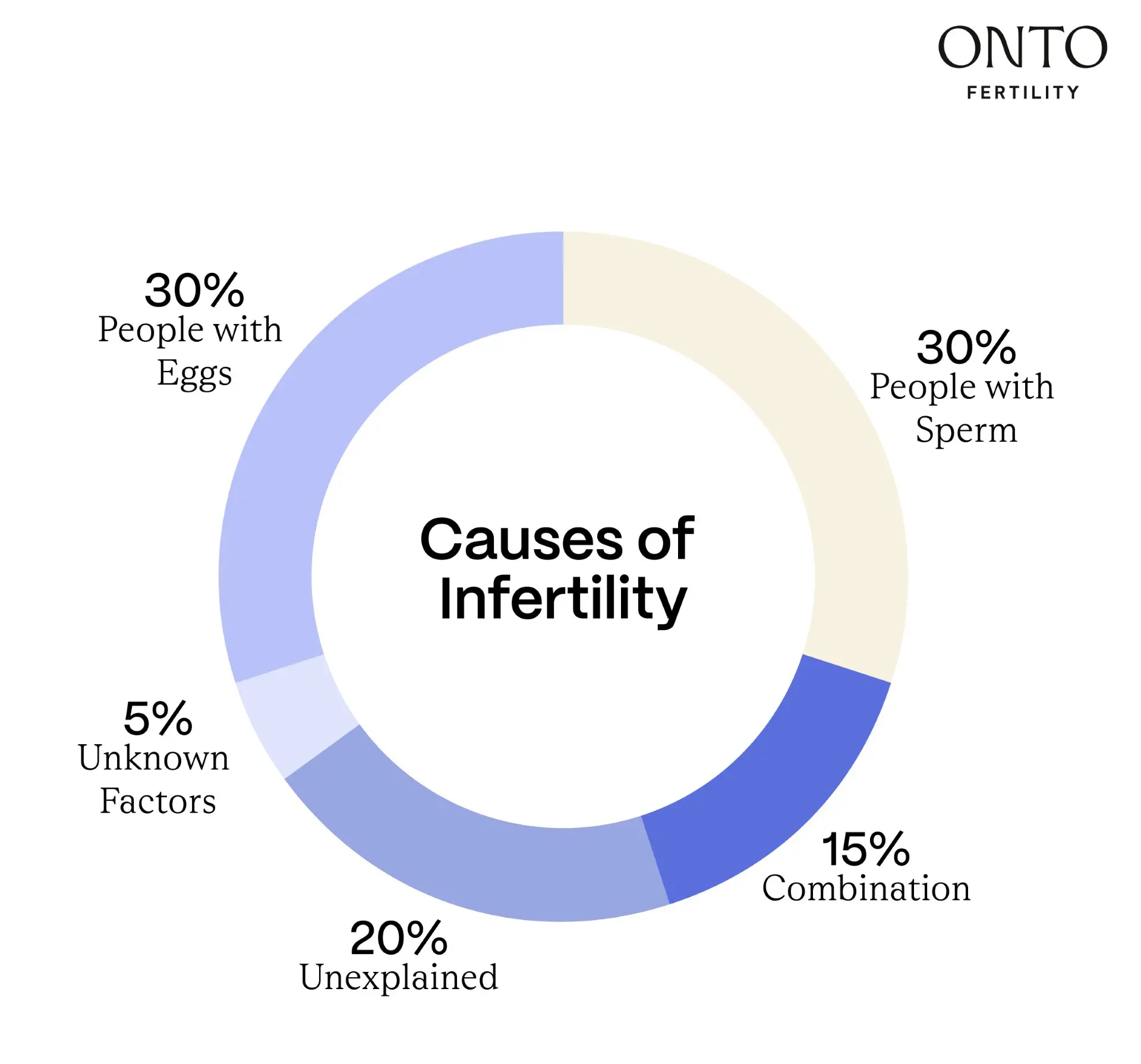
Common Factors That Can Affect Fertility
For People With Eggs
Some common causes include:
- Diminished ovarian reserve
- Endometriosis
- Ovulatory disorders like Polycystic ovary syndrome (PCOS)
- Primary ovarian insufficiency
- Structural issues such as blocked fallopian tubes or uterine fibroids
These conditions can affect whether an egg is released, whether it can meet sperm or whether implantation can occur.
For People With Sperm
Infertility may be linked to:
- Low sperm count
- Poor sperm movement or shape
- Absence of sperm
- Hormonal or genetic factors
- Varicocele (vein enlargement within the scrotum) or environmental exposures
Globally, sperm counts have declined significantly over the past several decades, making sperm health an important part of fertility evaluation.
Age Matters (But It’s Not the Whole Story)
Age alone doesn’t define fertility, but it does influence it.
- For people with eggs, fertility declines more noticeably after age 35, with infertility rates increasing by age 40
- For people with sperm, fertility declines after age 40, with changes in sperm quality and DNA integrity
Lifestyle and Environmental Factors
Everyday factors can quietly impact fertility over time.
These include:
- Smoking
- Excessive alcohol use
- Obesity
- Exposure to environmental toxins, like pesticides and endocrine disrupting chemicals
These factors don’t automatically cause infertility, but they can contribute and are often explored during a fertility assessment.
When There’s No Clear Answer
Sometimes, the only sign of infertility is the inability to get pregnant, even after testing.
About 1 in 5 infertility cases are considered unexplained, meaning standard testing doesn’t point to a single cause.
This uncertainty can be frustrating, but even when the cause is unexplained, a fertility intervention like a comprehensive evaluation can increase chances of conception for patients with unexplained infertility. Your clinician can determine the best next step for your unique situation.
When to Consider a Fertility Assessment
You don’t need to wait until you feel “ready enough” or you’ve “tried long enough.”
A fertility assessment can help if:
- You’ve been trying longer than expected
- You have known risk factors or diagnoses
- You want clarity about your reproductive health
- You simply want answers
At Onto Health, fertility assessment starts with listening to your history, your goals, your questions, followed by personalized diagnostic testing to understand what may be affecting fertility and what options make sense moving forward.
Infertility: Common Questions
What is considered infertility?
Infertility is typically defined as difficulty getting pregnant after 12 months of regular, unprotected sex if the person with eggs is under age 35, or after 6 months if they are age 35 or older. In some cases, evaluation may be recommended sooner if there are known medical conditions that could affect fertility.
What are the most common signs of infertility?
The most common sign of infertility is the inability to get pregnant after months of trying. Many people with infertility have no obvious symptoms. In some cases, irregular periods, absent periods, severe pelvic pain, or known reproductive conditions like PCOS or endometriosis may signal possible fertility concerns.
What are common causes of infertility?
Infertility can involve factors related to eggs, sperm, or both. Common causes include ovulation disorders, diminished ovarian reserve, endometriosis, blocked fallopian tubes, uterine conditions, low sperm count, poor sperm movement, hormonal issues, or genetic factors. In some cases, infertility is unexplained.
Can infertility happen even if I feel healthy?
Yes. Many people with infertility feel completely healthy and may not notice any symptoms. Fertility issues are often only discovered through medical evaluation and testing.
When should I see a fertility specialist?
A fertility evaluation is generally recommended after 12 months of trying to conceive if the person with eggs is under 35, or after 6 months if they are 35 or older. You may also consider evaluation sooner if you have irregular periods, known reproductive conditions, prior pelvic surgery, or other health concerns.
Does age affect fertility?
Age can influence fertility for both people with eggs and people with sperm. Fertility for people with eggs begins to decline more noticeably after age 35. For people producing sperm, fertility changes can occur after age 40, including changes in sperm quality.
What happens during a fertility evaluation?
A fertility evaluation usually begins with a detailed discussion of medical history and family-building goals. Diagnostic testing may include hormone testing, ovarian reserve testing, pelvic ultrasound, evaluation of the uterus and fallopian tubes, and semen analysis when applicable.
What if testing doesn’t show a clear cause?
In some cases, infertility is classified as unexplained. This means standard testing does not identify a single clear cause. Even without a specific diagnosis, fertility specialists can still recommend treatment options and next steps.
Sources
- Practice Committee of the American Society for Reproductive Medicine. Definition of infertility: a committee opinion. Fertil Steril. 2023;120(6):1170. doi:10.1016/S0015-0282(23)01971-4.
- World Health Organization. 1 in 6 people globally affected by infertility. Published April 4, 2023. https://www.who.int/news/item/04-04-2023-1-in-6-people-globally-affected-by-infertility.
- Gross R. Human sperm counts declining worldwide, study finds. Smithsonian Magazine. Published November 22, 2022. https://www.smithsonianmag.com/smart-news/human-sperm-counts-declining-worldwide-study-finds-180981138/.