
IVF at Onto Health
IVF Treatment: A Personalized Path to Building Your Family
There’s no single path to building a family.
For some people, that path includes in vitro fertilization (IVF). IVF brings eggs and sperm together in a laboratory to create embryos, which can then be transferred to the uterus or frozen for future use.

We don’t begin with the assumption that IVF is your answer.
We begin by understanding your fertility, your goals and your family-building plans — then create a treatment plan personalized to you.
Understanding IVF
What is IVF?
In vitro fertilization, commonly called IVF, is a fertility treatment in which eggs are retrieved from the ovaries and fertilized with sperm in a laboratory. The resulting embryos are monitored as they develop, and an embryo may later be transferred to the uterus with the goal of achieving pregnancy.
IVF can also make it possible to freeze embryos for future family building, use donor eggs or sperm, pursue genetic testing of embryos when appropriate, or create embryos for transfer to a gestational carrier.
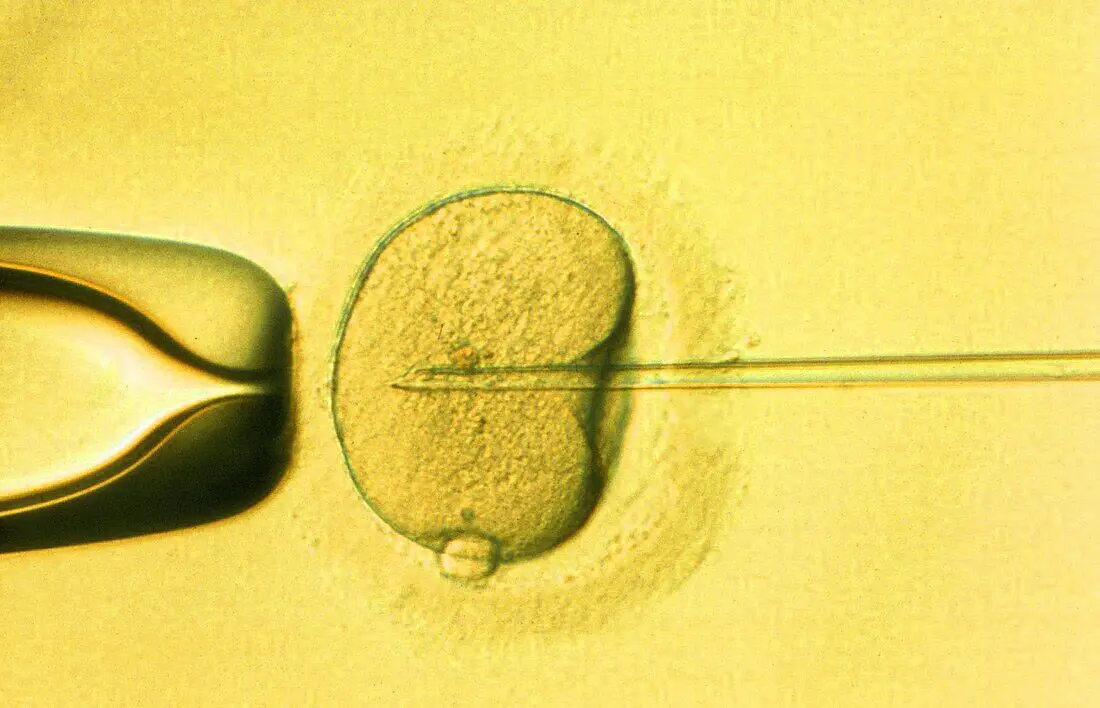
Eggs and sperm are brought together in the laboratory to create embryos.
Who might consider IVF?
IVF may be recommended for people experiencing:
- ✓ Blocked or damaged fallopian tubes
- ✓ Ovulation disorders, including PMOS
- ✓ Endometriosis
- ✓ Diminished ovarian reserve or age-related fertility changes
- ✓ Male factor infertility
- ✓ Unexplained infertility
- ✓ Previous unsuccessful fertility treatments
- ✓ Recurrent pregnancy loss in certain circumstances
- ✓ A need for donor eggs or donor sperm
- ✓ Family building that requires a gestational carrier
- ✓ A desire to test embryos for certain genetic or chromosomal conditions
IVF can also be part of family building for LGBTQ+ individuals and couples and for people who need donor eggs, donor sperm or a gestational carrier.
Whether IVF is the right next step depends on your individual circumstances. That’s why every Onto treatment plan begins with understanding your fertility first.
many ways
IVF is one of many ways to build a family.
Getting pregnant doesn’t always happen the way you expected. And needing fertility care doesn’t automatically mean you need IVF.
At Onto Health, your family-building plan is based on your fertility evaluation, medical history and goals. Depending on what we learn, your treatment options may include:
Timed Intercourse
Monitoring ovulation can help identify the optimal time for intercourse. For some patients, timed intercourse with or without fertility medication – may be an appropriate first step.
Medicated Cycles
Fertility medications such as letrozole, clomiphene or injectable hormones can help support ovulation and egg development. Your cycle may be monitored with bloodwork and ultrasound to help determine the right timing.
Intrauterine Insemination (IUI)
During IUI treatment, specially prepared sperm is placed directly into the uterus around ovulation. IUI may be considered for certain ovulation concerns, unexplained infertility, mild male factor infertility or family building with donor sperm.
In Vitro Fertilization (IVF)
IVF gives your fertility team the ability to retrieve eggs, fertilize them in the laboratory and monitor embryo development before transfer. It may be recommended when IVF offers a better path forward based on your diagnosis, age, treatment history or family-building needs.
The goal isn’t to get you to IVF.
The goal is to help you find the treatment that makes sense for you.
Compare your options
IUI vs. IVF: What’s the Difference?
Which is right for you?
There isn’t one answer for everyone. Your age, fertility testing, diagnosis, treatment history and family-building goals can all help determine whether IUI, IVF or another option makes sense.
The IVF process, step by step
How does IVF work?
IVF may sound complicated when you first hear about it. Breaking the IVF process into individual steps can make it much easier to understand.
Fertility Consultation & Testing
Bloodwork, ultrasound and other testing help us understand your fertility and create your treatment plan.
Ovarian Stimulation
Fertility medications help multiple eggs develop while bloodwork and ultrasounds monitor your progress.
Egg Retrieval
A short outpatient procedure collects mature eggs from the ovaries.
Fertilization
Eggs are combined with sperm in the laboratory to create embryos.
Embryo Development
Embryos develop in the lab while the embryology team monitors their progress.
PGT (Optional)
Optional genetic testing can provide additional information about embryos before transfer.
Embryo Freezing
Embryos can be cryopreserved for a future frozen embryo transfer.
Embryo Transfer
An embryo is placed into the uterus with the goal of pregnancy.

After IVF
What is a frozen embryo transfer (FET)?
A frozen embryo transfer, or FET, uses an embryo that was created during IVF and cryopreserved for future use.
Before the transfer, the uterine lining is prepared and monitored so the embryo can be transferred at an appropriate time. The embryo is then thawed and transferred into the uterus during a brief procedure.
Frozen embryo transfer allows patients to use embryos created during an earlier IVF cycle without repeating ovarian stimulation and egg retrieval for every transfer.
For some patients, additional frozen embryos may also provide options for trying again or growing their family in the future.
Every family is different
IVF for different family-building paths.
There is no single definition of what a family looks like and there is no single way to build one. IVF can be used in several different family-building situations.

IVF With Your Own Eggs and Sperm
Eggs are retrieved, fertilized with sperm in the laboratory and developed into embryos for potential transfer.

IVF With Donor Sperm
Donor sperm can be used to fertilize retrieved eggs during IVF when donor sperm is part of your family-building plan.

IVF With Donor Eggs
Donor eggs may be considered when using your own eggs isn’t possible or isn’t expected to provide a reasonable opportunity for pregnancy. Donor eggs are fertilized with sperm to create embryos for transfer.
IVF and Gestational Carriers
IVF can create embryos that are later transferred to a gestational carrier. This can be a family-building option for people who cannot or should not carry a pregnancy themselves.
LGBTQ+ Family Building
IVF may be part of family building for same-sex couples and LGBTQ+ individuals, including treatment using donor sperm, donor eggs or a gestational carrier depending on your individual family-building plan.
Understanding your chances
IVF success rates: What determines your chances?
There isn’t one IVF success rate that applies to everyone. Your chances of success can be influenced by several factors, including:

Age

Egg and sperm factors

Fertility diagnosis
Embryo development

Treatment history
Your chances of IVF success depend on your individual fertility factors, particularly age when using your own eggs. Your Onto fertility specialist will use your testing, medical history and treatment plan to help you understand what IVF success may realistically look like for you.
Cost, before you commit
How much does IVF cost?
At Onto Health, we believe you should understand the financial side of treatment before you begin. Our team can help you review your treatment plan, insurance benefits when applicable and available self-pay pricing so you know what to expect.
What can shape your cost
The cost of IVF treatment can vary depending on:
Medications
Laboratory services
Genetic testing
Insurance coverage
Some patients may also need additional services:
Embryo freezing
Frozen embryo transfer
Donor eggs or sperm

Your path to parenthood is personal. We believe your IVF care should be, too.
Why Onto
What makes IVF at Onto Health different?
At Onto, your treatment begins with understanding your individual fertility story and what you’re hoping to achieve.
Personalized From the Start
Your fertility testing, treatment recommendations and IVF protocol are based on your individual health and family-building goals.
Understand the “Why”
We don’t simply tell you what’s next. We help you understand what we’re seeing, why we’re recommending a treatment and what your options are.
A Team With You Throughout Treatment
From your initial consultation and fertility testing through monitoring, egg retrieval, embryo development and transfer, our clinical and patient care teams are there to guide you.
Your Family. Your Decisions.
Our role is to give you the information and medical guidance you need to make informed decisions about your fertility and your future.
Before you book
Frequently asked questions about IVF
How long does IVF take?
Is IVF painful?
IVF can involve some discomfort from injections and egg retrieval. The retrieval itself is performed under sedation to help keep you comfortable.
Do I need IVF if I’m having trouble getting pregnant?
Not necessarily! Depending on your needs, treatments like medicated cycles or IUI may be options before IVF.
Can IVF be used with donor sperm?
Yes! IVF can be performed with donor sperm, offering family-building options for individuals, couples and LGBTQ+ families.
What is ICSI?
Intracytoplasmic Sperm Injection (ICSI) is a technique where a single sperm is injected directly into an egg during IVF to help with fertilization.
What is PGT?
Preimplantation Genetic Testing (PGT) screens embryos for certain genetic or chromosomal conditions before transfer to help guide treatment decisions.
How many embryos are transferred during IVF?
Typically, one embryo is transferred at a time to reduce the risks of multiple pregnancies, though recommendations vary by patient.
How do I know if IVF is right for me?
Your Onto fertility specialist will review your health, fertility testing and family-building goals to help determine whether IVF is the right next step.

You don’t have to know your treatment before your first appointment.
Maybe IVF is your next step. Maybe another fertility treatment makes more sense. Start with a conversation. At Onto Health, we’ll help you understand your fertility, explore your family-building options and create a personalized plan for what comes next.